How to Mix Patterns in a Rental Home Without It Looking Chaotic
Pattern mixing has a reputation for being difficult. Either you avoid it entirely — playing it safe with plains and ending up with a room that feels a bit flat — or you go all in and it ends up looking chaotic and busy.
The truth is pattern mixing isn’t instinctive. It’s a framework. And once you understand it, it becomes one of the most enjoyable and effective tools you have for making a rental home feel genuinely designed.
The best part is that you can mix patterns in a rental home through rugs, cushions, throws, curtains, and bedding — nothing permanent, nothing that touches a wall, nothing that costs you your deposit.
The framework: three scales
The reason pattern mixing goes wrong is almost always the same — everything is the same scale.
Three cushions in three different patterns that are all roughly the same size compete with each other. The eye doesn’t know where to settle and the result feels restless and cluttered.
The solution is to vary the scale deliberately. Designers work with three scale categories: large, medium, and small. When you have one of each, the eye reads them as a cohesive layered scheme rather than a collection of competing elements.
Large scale: the anchor pattern
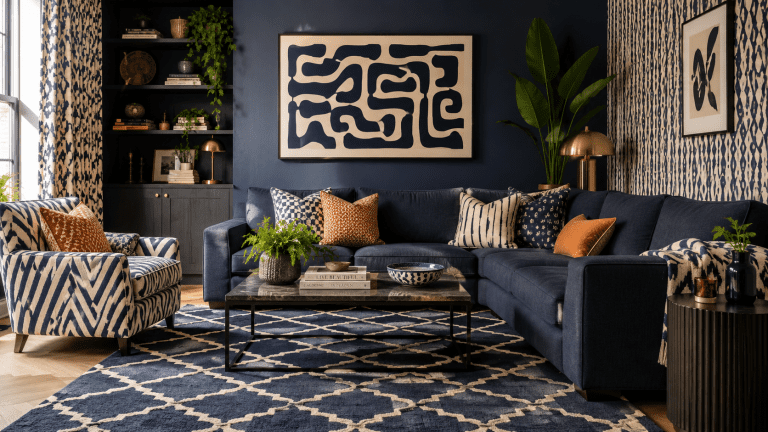
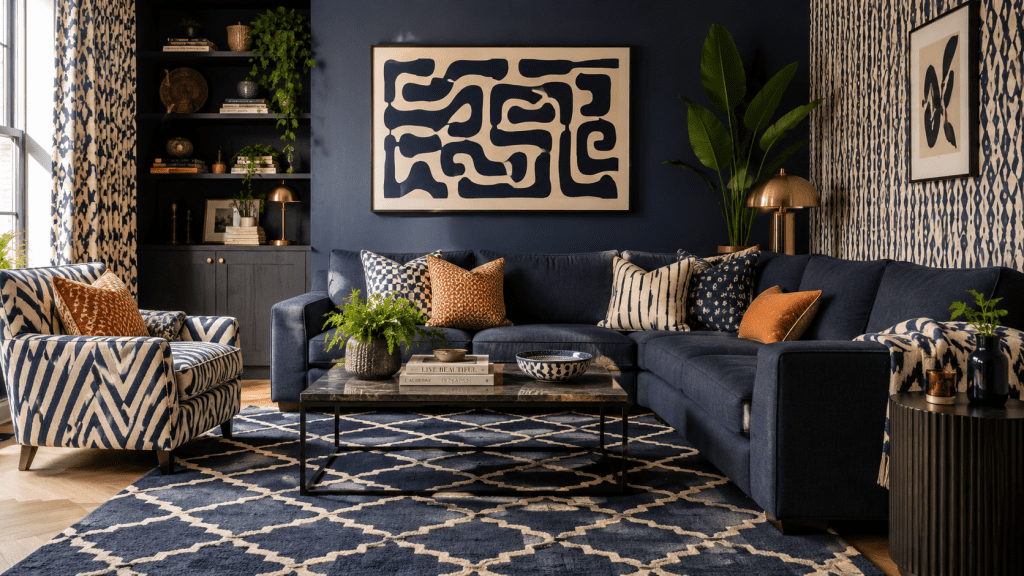
Your large scale pattern is the biggest and boldest element in the room. It sets the direction that everything else follows.
For renters, the large scale pattern is most often found in:
Rugs — a large patterned rug anchors the whole room and is the single most impactful patterned piece you can introduce.
Curtains — floor-to-ceiling patterned curtains bring enormous scale and drama to a room without touching a single wall.
A large piece of artwork — an oversized print or canvas with a strong pattern or graphic quality functions as a large scale element even though it’s flat.
Choose your large scale pattern first. Everything else will be chosen in relation to it — pulling colours from it, supporting it without competing with it.
Medium scale: the supporting pattern
Your medium scale pattern is the bridge between the anchor and the detail. It’s noticeably smaller than your large scale element but still clearly a pattern rather than a texture.
This scale typically lives in:
Cushions — one or two cushions in a medium scale pattern that shares at least one colour with your large scale anchor.
A throw — draped over a sofa or the end of a bed, a medium scale patterned throw brings the second layer without dominating.
A smaller textile — a table runner, a small additional rug, a decorative pillowcase.
The key rule for medium scale is that it should complement the large, not compete with it. If your large scale is a bold geometric rug, your medium scale might be a softer floral or a loose check — different in character but connected through colour.

Small scale: the detail layer
Your small scale pattern is the quiet one — the element that ties everything together without announcing itself. Fine stripes, subtle geometrics, tiny prints, simple woven textures.
In practice this might be:
A finely striped cushion alongside your bolder patterned ones. A delicately textured throw. A woven basket. A small print repeated across bedding.
Small scale patterns are often the difference between a scheme that feels finished and one that feels almost there. They add depth and detail without adding visual noise.
The golden rules
Three rules that hold the whole thing together:
Vary the scale deliberately. Large, medium, small — not large, large, medium. The difference in scale is what creates harmony.
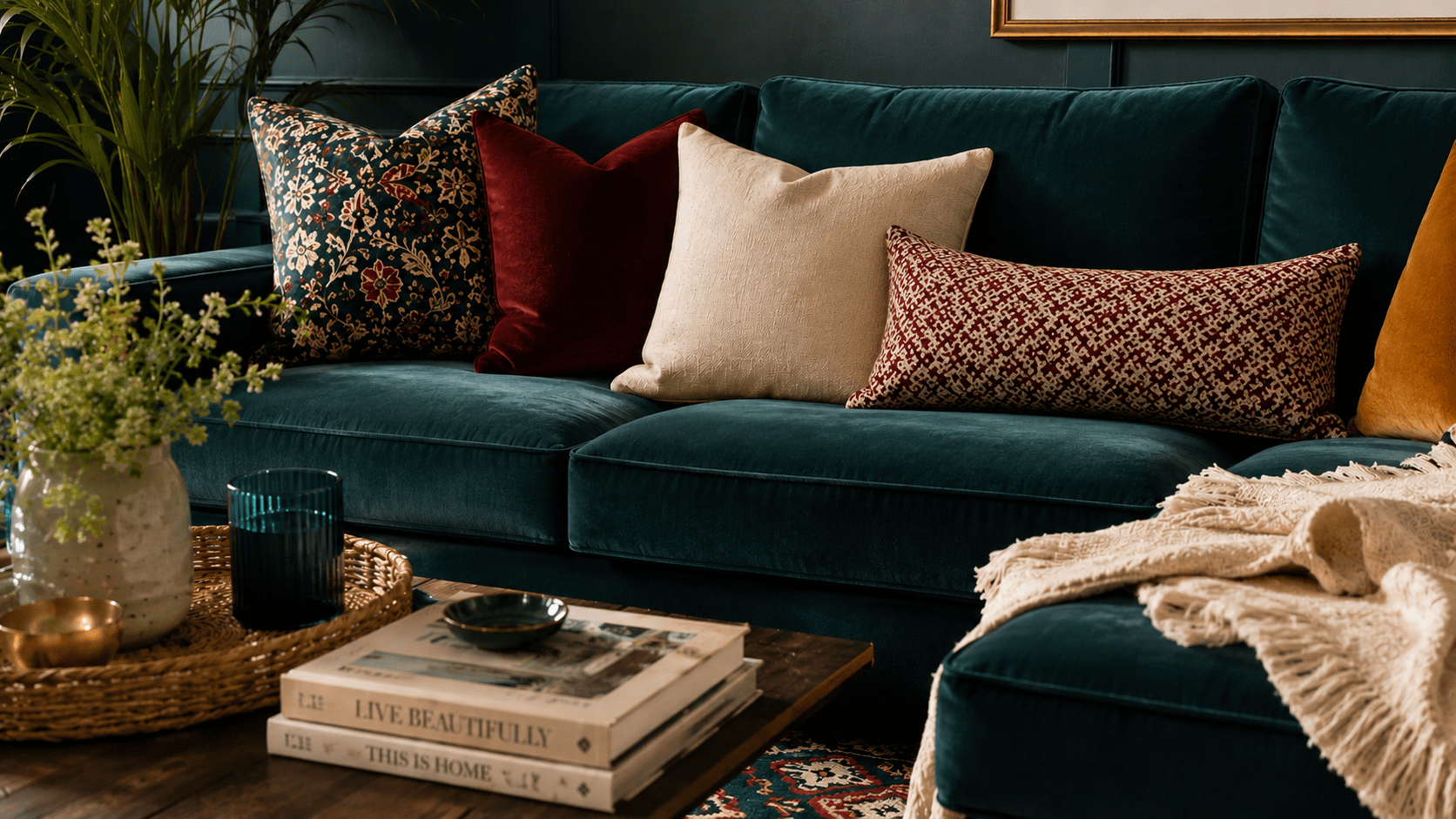
Run a common colour through all three. Your patterns don’t need to match. They need to be connected. Pull one colour from your large scale anchor and make sure it appears somewhere in both your medium and small scale choices. That thread of colour is what makes the scheme read as intentional.
Use plains as breathing room. Not every piece in the room needs to be patterned. Plain cushions, plain throws, plain walls — these are the pauses between the patterns that let each one register properly. A room of all pattern with no plain relief is as overwhelming as a room of no pattern at all.
A worked example
Here’s how it looks in practice in a living room.
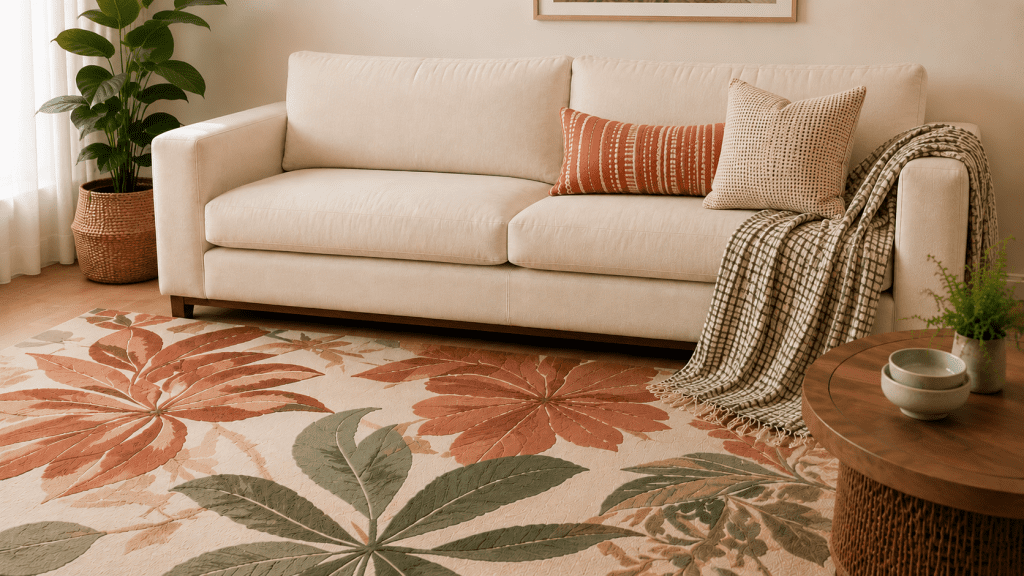
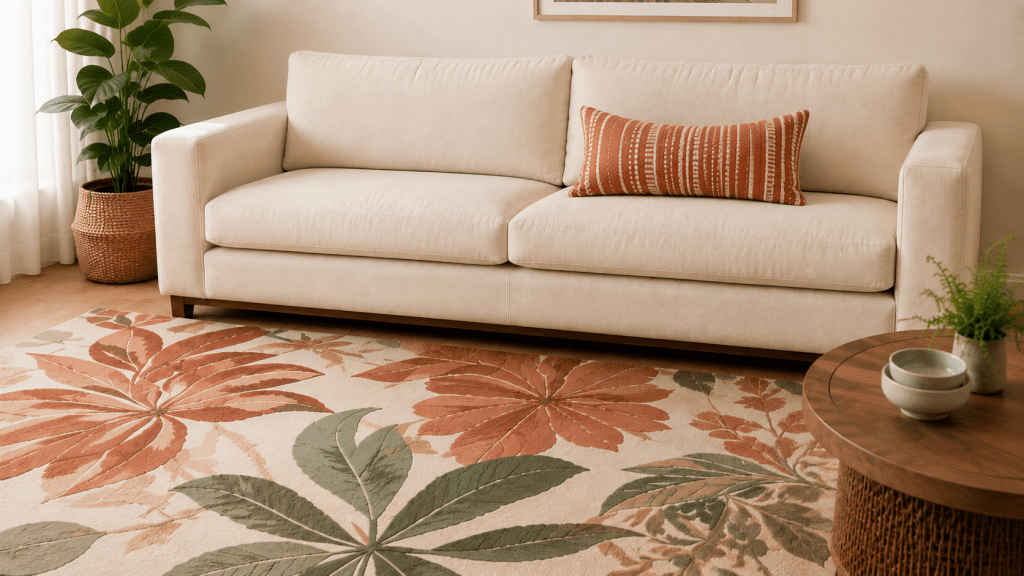
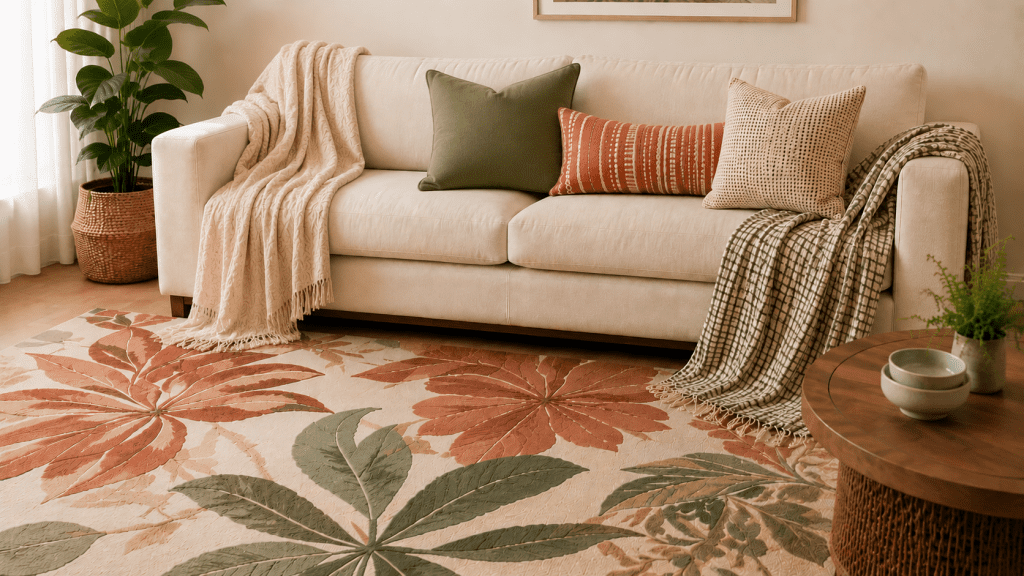
Large scale: a bold botanical rug in cream, sage, and rust. The pattern is large and confident — leaves and stems at significant scale.
Medium scale: two cushions in a loose linen check that picks up the sage from the rug. The check is clearly a pattern but sits quietly alongside the botanical without competing.
Small scale: a fine stripe throw in cream and rust — the two remaining colours from the rug — folded over the arm of the sofa. The stripe is barely there at distance but adds a layer of detail close up.
Plains: the sofa itself in a warm cream linen. The plain surface gives all three patterns room to breathe.
One colour family, three scales, one plain anchor — and the room reads as considered, layered, and designed.

Where to start
If you have a patterned rug already, start there. Identify the colours in it and use those to guide your medium and small scale choices.
If you’re starting from scratch, choose your large scale pattern first — it’s the decision everything else follows from.
And if you’re not sure about your colour choices before committing to anything, my Colour Guide for Renters walks through how to build a cohesive colour scheme for your rental home from the ground up.
Watch the full video on YouTube for a visual walkthrough of the three scale framework in action.